A Wave of Price Increases for Lithium-Ion Anode Materials: Driven by Recovering Demand and Rising Costs
Driven by surging demand for
energy storage, the heating up of the AI data center (AIDC) sector, and robust power
battery exports, the global supply-demand balance for lithium-ion anode materials is shifting toward a tight equilibrium. Data from SPIR (Start Point Research) indicates that the global anode material market volume reached 1.82 million tons in the first half of 2026, a year-on-year increase of 44.9%. Full-year shipments are projected to hit 4.074 million tons (up 49.6% year-on-year) and rise to 8.28 million tons by 2030, representing a five-year compound annual growth rate (CAGR) of 24.9%; leading companies are currently operating at full capacity with all output sold.

Regarding pricing, prices in the first half of the year rose to 36,000 yuan/ton for artificial graphite, 30,500 yuan/ton for natural graphite, and 145,000 yuan/ton for silicon-based anodes. These increases are driven by both demand and cost factors: geopolitical conflicts in the Middle East have pushed up international oil prices, driving up the costs of key raw materials like petroleum coke and needle coke. Coupled with a shortage of outsourced graphitization capacity, these cost pressures have cascaded down to the manufacturing stage.
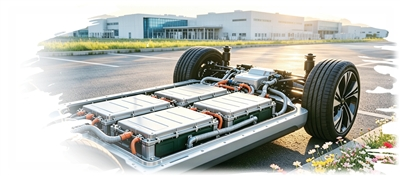
In terms of market landscape, low-end capacity is being phased out while
new capacity additions lag, allowing manufacturers to regain bargaining power; companies such as BTR, Shanshan, and Zhongke Xingcheng rank among the top ten globally in shipments. However, industry observers warn that price hikes are not a cure-all for profitability, and companies must guard against speculative hype and hoarding-driven price inflation. Profitability divergence is also expected to intensify: companies with low self-supply rates for raw materials face profit pressure, while those with high self-supply rates enjoy distinct cost advantages.
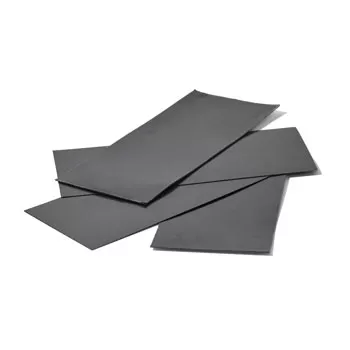
The ensuing wave of capacity expansion focuses on high-quality production capabilities. Due to the high energy consumption of graphitization, access to low electricity prices and green energy is critical for site selection. Strategies include establishing integrated production bases in Southwest and Northwest China, leveraging coastal locations for logistics support, and developing overseas bases that foster localized supply chains while complying with local low-carbon policies. Overall, this market recovery represents a systemic correction of supply-demand dynamics, characterized by simultaneous price stabilization and structural upgrading. In the face of global competition, building a "moat" based on production capacity and technological prowess remains the fundamental key to long-term corporate competitiveness.


