As motorcycles, dirt bikes, snowmobiles, and personal watercraft continue to evolve toward lighter weight, higher performance, and greater intelligence, the role of the starter battery has expanded well beyond simply providing the current needed to crank the engine.
Particularly in scenarios involving cold-weather starting, long-term storage, frequent stop-start operation, and demanding outdoor environments, these vehicles place increasingly rigorous demands on starter batteries—specifically regarding peak discharge capacity, weight, safety protection, and battery state management.
In order to meet application needs, Tipsun has launched a cylindrical lithium iron phosphate battery series, including three models:
72V 30AH, 72V 40AH, and 72V 50AH. This series of batteries all use
32140, 40140, and 60145 lithium iron phosphate cell solutions, with a continuous current range from 45A to 60A. In addition, it integrates smartphone-based intelligent management, low-voltage protection and multiple safety functions. Compared with traditional lead-acid motorcycle starter batteries, it is lighter, more powerful and smarter, making it a more ideal upgrade choice.
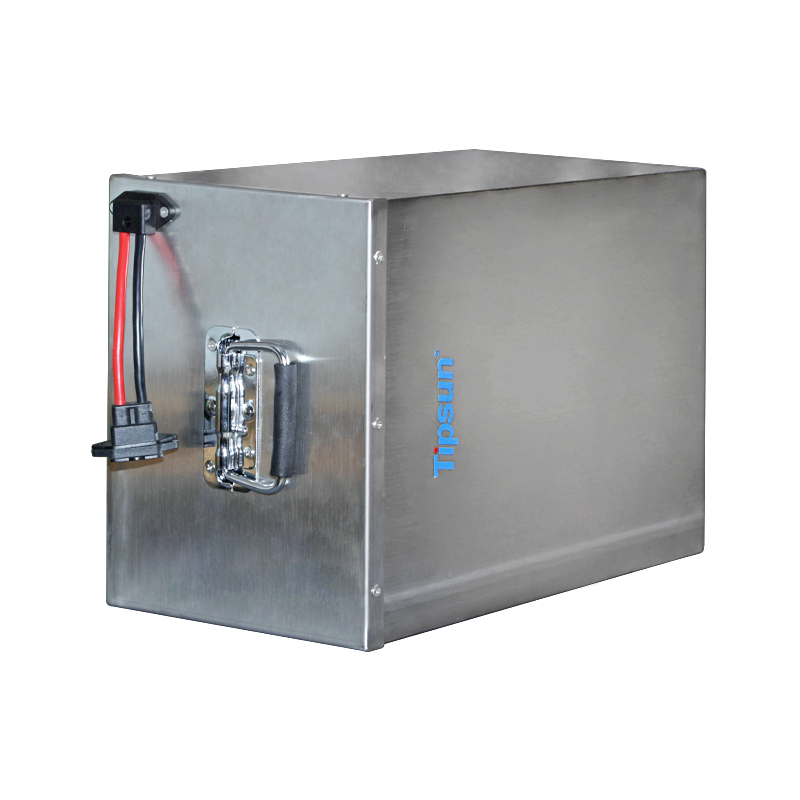
Tipsun 72V lithium iron phosphate motorcycle battery pack|30AH / 40AH / 50AH optional
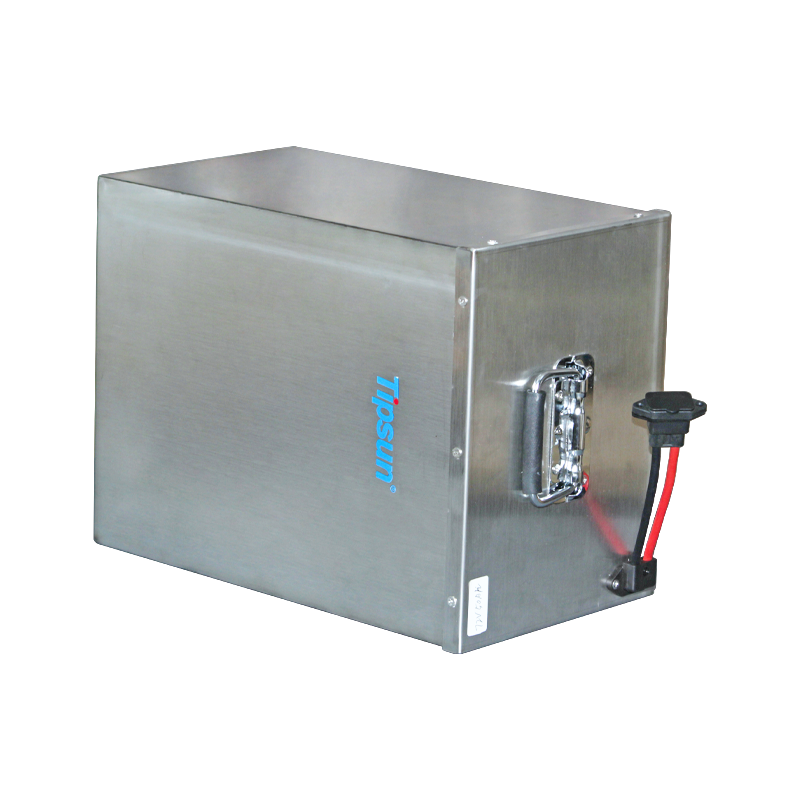
It uses original Tipsun lithium iron phosphate battery cells, a solid stainless steel shell, and comes with a portable handle and high-power plug, making installation and transportation easier.
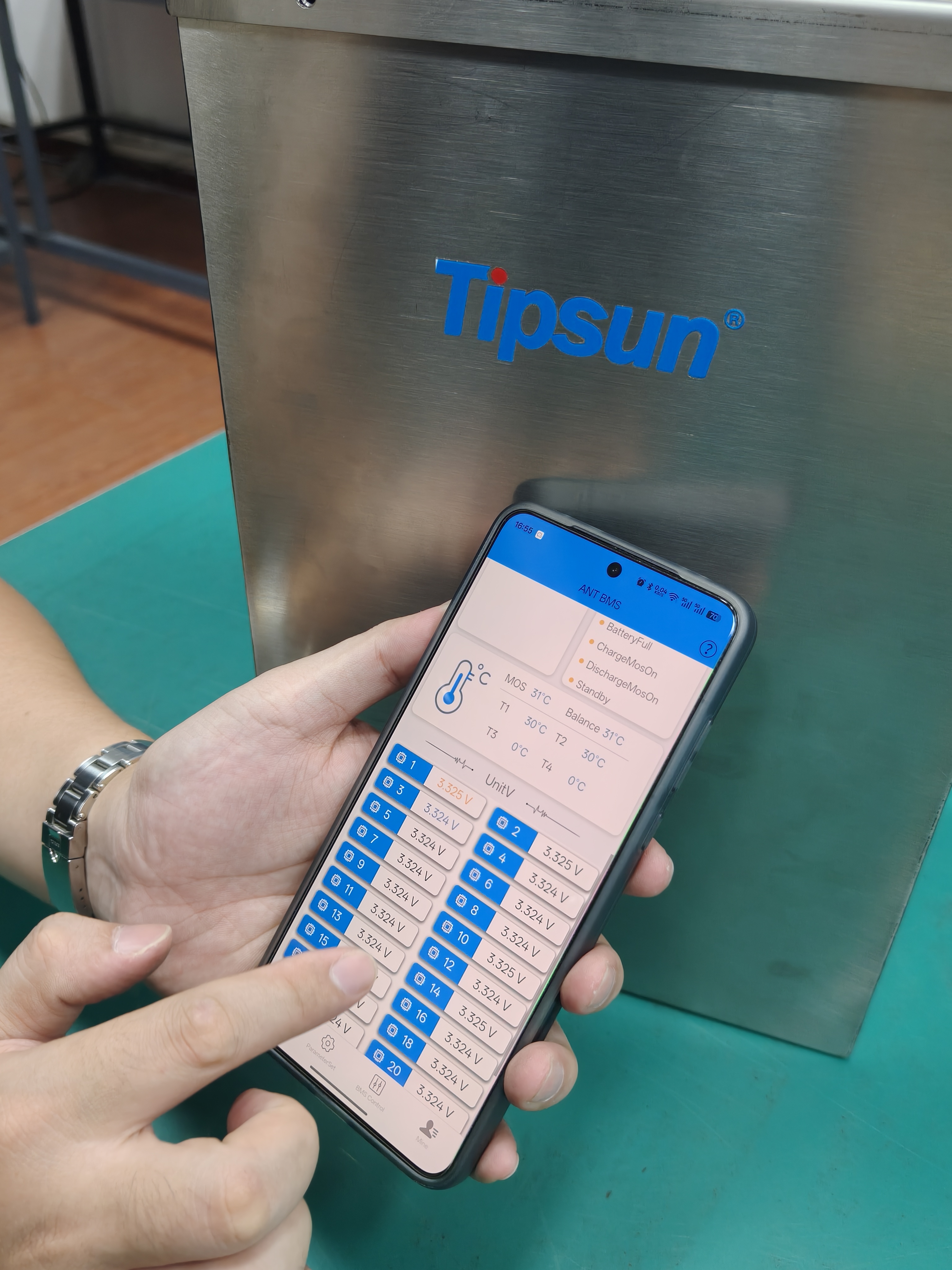
Built-in Bluetooth smart BMS protection board, one-click connection through mobile phone APP, real-time viewing of each cell voltage, temperature, SOC, SOH, battery status is at hand, which facilitates fault prediction and daily maintenance.
Tipsun LiFePO4 (Lithium Iron Phosphate) Batteries vs. Traditional Lead-Acid Batteries for E-Bikes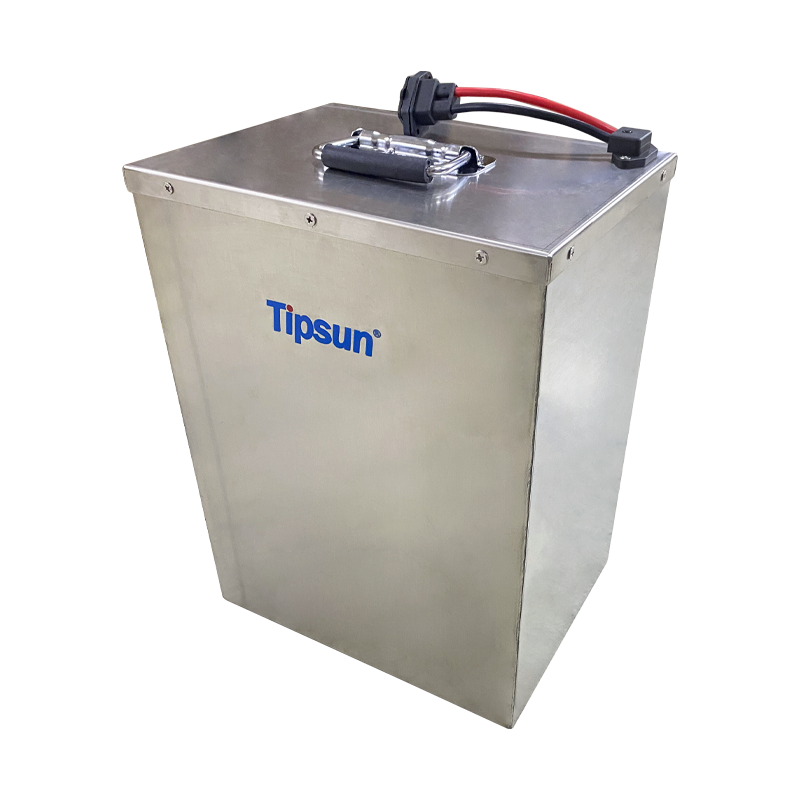
| Comparison Item |
Lead-Acid Battery (VRLA/AGMGel) |
LiFePO4 Battery (IFR-LFP) |
| Nominal voltage per cell |
2.0V |
3.2V |
| Charge cutoff voltage per cell |
2.4V |
3.65 V |
| Energy density |
30-50 Wh/kg; heavy and bulky |
100-150 Wh/kg; about 1/3 the weight of lead-acid at the same capacity |
| Cycle life (at 80% DOD) |
300-500 cycles; short service life |
2,000-3,000 cycles; 4-6 x the life of lead-acid |
| Usable depth of discharge(DOD) |
Recommended <50% deepdischarge; deep dischargeseverely shortens life |
Usable up to 80-90% DOD;supports deep discharge |
| Discharge platform |
Voltage drops off sharply as discharge proceeds; output voltage keeps falling |
Flat voltage plateau; stable output voltage throughout discharge |
| Charging speed |
Slow; full charge takes 6-10hours; no fast charging |
Fast charge supported; full charge in 1–3 hours; high charging efficiency |
| Maintenance |
Flooded types requirewater top-up; sealed types release hydrogen and need ventilation |
Equipped with BMS;maintenance-free |
| Upfront purchase cost |
Low |
High |
| Long-term total cost of ownership |
Frequent replacement; high long-term total cost |
Long service life;lower long-term total cost |
| Environmental impact |
Contains heavy metallead and sulfuric acid;requires special disposal/recycling |
Free of lead, cadmiumand other heavymetals; relatively eco-friendly |
| Protection devices |
No BMS required |
Must be paired with aBMS; protects againstovercharge, over-discharge and over-current |
| Typical finished product |
12 V lead-acid (6 cellsin series: 6 x 2 V) |
12.8 V LiFePO4 (4S: 4x 3.2V) |
Traditional lead-acid batteries have long been the go-to choice for many e-bike users, yet they come with significant drawbacks:
Lead-acid batteries are exceptionally heavy. A high-capacity 72V lead-acid battery pack adds substantial load to the vehicle, which negatively impacts both range and handling, and accelerates wear on the suspension system over time. Furthermore, lead-acid batteries have a short cycle life; their performance typically degrades significantly after just 300–500 charge-discharge cycles. Consequently, the entire pack usually requires replacement every 1–2 years, leading to high cumulative costs from repeated purchases.
Moreover, lead-acid battery systems lack the ability to monitor individual cells. If one cell underperforms, the performance of the entire pack drops precipitously—often leaving users unaware of the issue until the vehicle can no longer move. These batteries also carry a high risk of leakage or swelling, and their acidic electrolyte can corrode the vehicle frame, posing serious safety hazards.