When a car key fob begins to work only at very close range, responds intermittently, or stops unlocking the vehicle altogether, the first solution that comes to mind is usually quite simple: replace the battery.
For many modern key fobs, this involves opening the casing and installing a CR2032 or CR2025 coin-cell battery. However, some older car key fobs are designed differently; instead of using disposable coin-cell batteries, they utilize small rechargeable batteries that are soldered directly onto the circuit board.
Common battery types found in these types of keys include the
CR2032, CR2025, CR2016, CR1632, CR1620, CR1616, CR2430, and CR2450.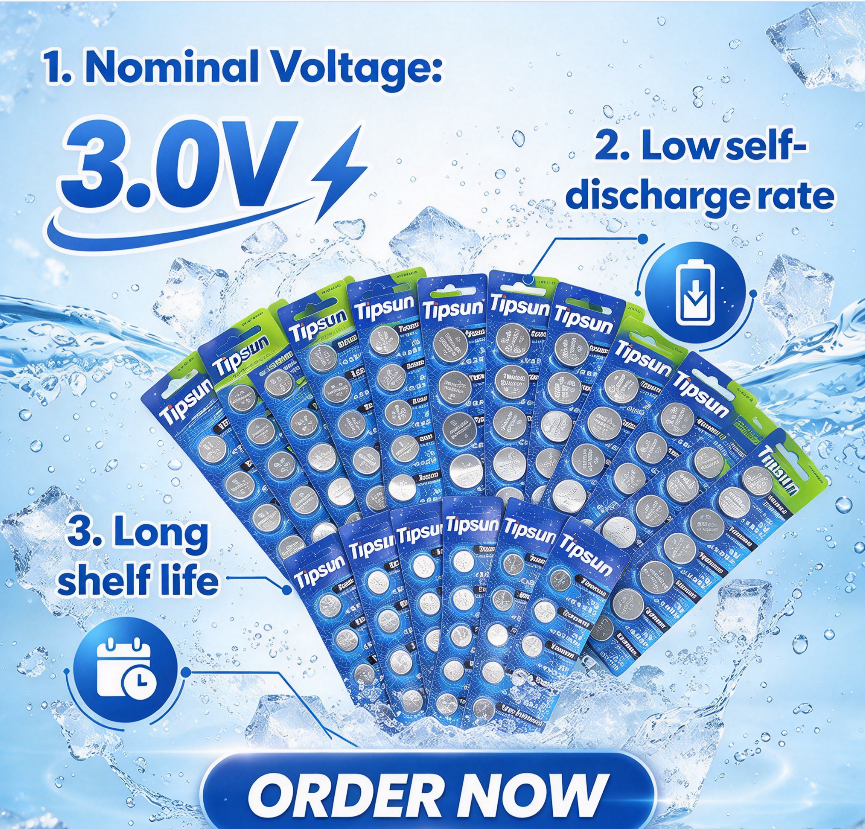
The "CR" designation refers to disposable, non-rechargeable lithium-manganese batteries. These offer high capacity and a low self-discharge rate, making them ideal for use in remote controls and car key fobs.
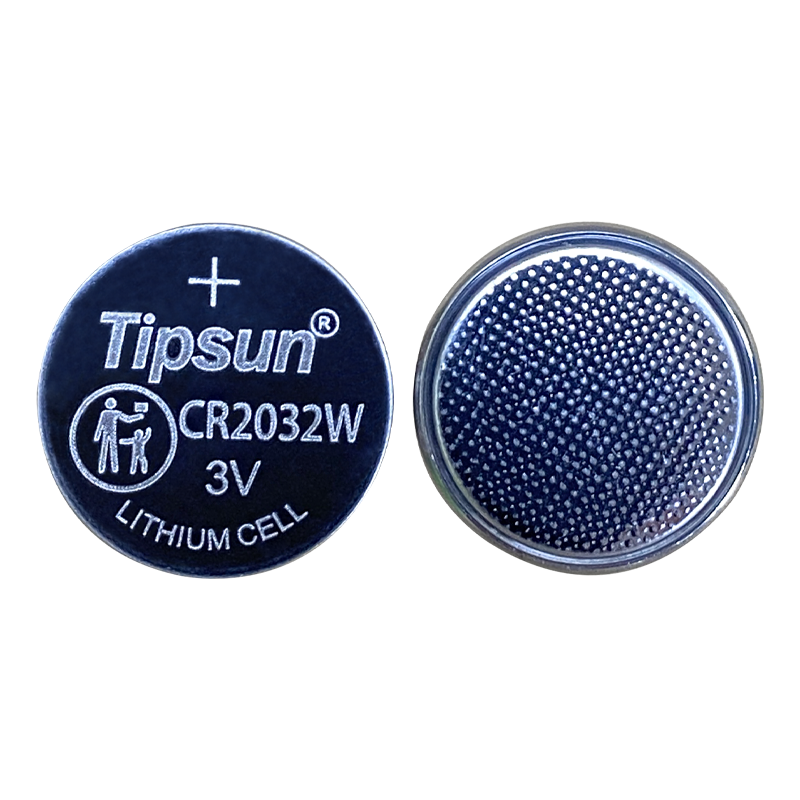
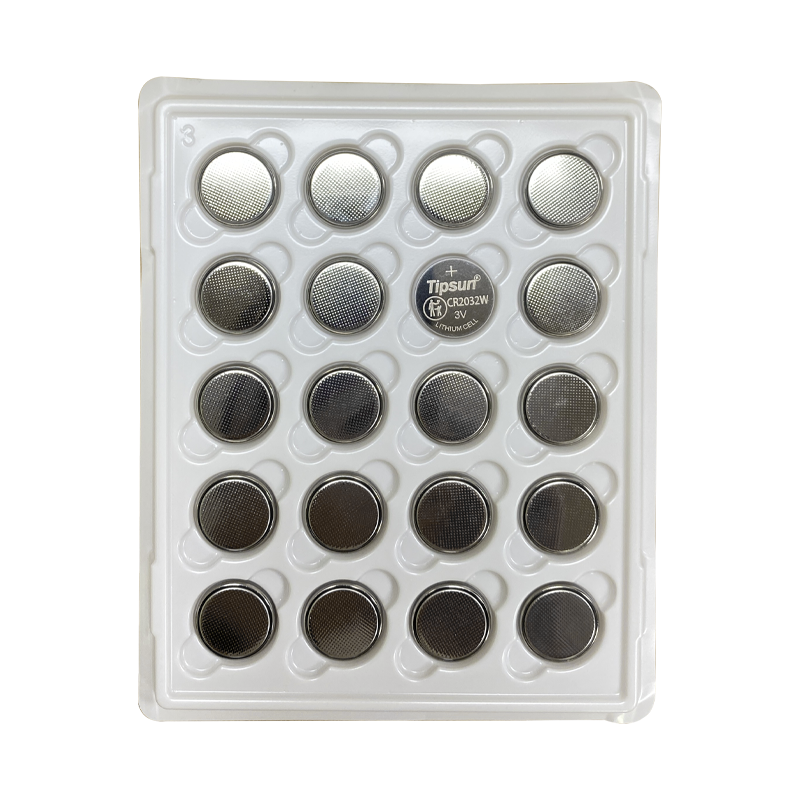
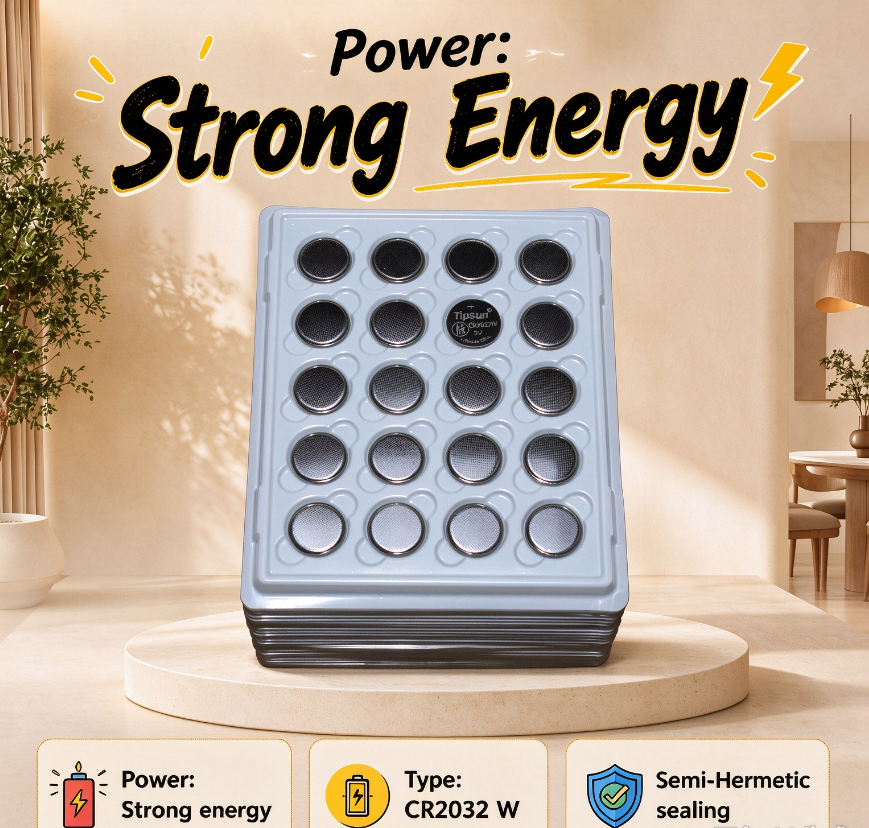
Additionally, there is the CR2032W (
"W" standing for "Wide Temperature"—an industrial/automotive-grade, high-temperature version). It shares the exact same dimensions as a standard CR2032 (a 3V lithium-manganese coin cell measuring Φ20×3.2mm).
This guide explains what a CR2032W battery is, why some car key fobs use it, how it differs from standard CR2032 or ML2020 batteries, and what you should check before ordering a replacement.
I.
Advantages of CR2032W1. Ultra-wide Operating Temperature Range: Typically -40°C to +85°C, with some specifications capable of withstanding up to 125°C for short periods; in contrast, standard consumer-grade CR2032 batteries are generally limited to a range of -20°C to +60°C.
When vehicles are exposed to intense summer heat, the interior temperature can soar, often causing standard coin-cell batteries to experience rapid voltage drops and remote control malfunctions. The CR2032W, however, maintains stable discharge even at high temperatures, making it **ideally suited for automotive key fobs and TPMS (Tire Pressure Monitoring System) sensors.
2. Consistent Discharge Across Temperature Extremes: In the cold winter environments of northern regions, these batteries exhibit minimal voltage drop, ensuring that the effective range of remote controls does not significantly diminish.
3. Superior Leak Resistance: Manufactured with industrial-grade sealing technology, they carry a much lower risk of leakage, even when stored at high temperatures for extended periods.
4. Fully Compatible with Standard CR2032 Dimensions: They can serve as a direct replacement for any device that uses a standard CR2032 battery (such as car key fobs, motherboard CMOS batteries, or remote controls).
5. Long shelf life with a low self-discharge rate, supporting storage periods of 5 to 8 years.
| Item |
CR2032W (Tipsun Wide-Temperature Version) |
CR2032 (Standard Consumer Grade) |
ML2020 (Tipsun Rechargeable Button) |
| Type |
Primary Lithium-Manganese Battery |
Primary Lithium-Manganese Battery |
Rechargeable Lithium-Manganese Battery |
| Voltage |
3V |
3V |
3V |
| Dimensions |
Φ20×3.2mm |
Φ20×3.2mm |
Φ20×2.0mm(1.2mm thinner, not interchangeable) |
| Capacity |
Approx. 210 mAh |
Approx. 220–230 mAh |
Approx. 45 mAh |
| Temperature Range |
-40°C to +85°C (Wide-temperature range for industrial/automotive applications) |
-20°C to +60°C (Standard Consumer Grade) |
-20℃ ~ +60℃ |
Key Features
|
Stable voltage in both high-heat (sun exposure) and extreme cold environments; enhanced leak resistance |
Affordable price.
Good performance at room temperature, with slightly higher capacity. |
Rechargeable, but with very low capacity; requires an accompanying charging circuit. |
| Automotive Key Compatibility |
Preferred choice for vehicle keys and TPMS in tropical or extremely cold regions. |
Suitable for car keys used in temperate environments; however, the voltage may drop if exposed to high temperatures (e.g., in direct sunlight). |
⚠️ Only compatible with older-model BMW keys that feature a built-in charging coil; using this with a standard car key will render the key permanently unusable—not recommended. |
II. CR2032W vs. CR2032
✅ Similarities: They share identical physical dimensions and are both 3V primary (non-rechargeable) coin-cell batteries. They are compatible with the same pins/battery holders and can be used interchangeably.
✅ Differences: 1. The CR2032W features a wide-temperature formulation, specifically optimized for discharge performance across high and low temperatures. It maintains stable voltage even when exposed to temperatures of 60–80°C (140–176°F)—such as inside a vehicle parked in the sun—making it the preferred choice for automotive accessory applications in tropical regions or the Middle East. In contrast, a standard CR2032 experiences significant performance degradation at high temperatures, which can often cause car key fobs to malfunction.
2. The CR2032W utilizes an upgraded sealing structure, which reduces the risk of leakage. The trade-offs are a slightly lower capacity and a higher unit price.
3. Standard CR2032 batteries are best suited for devices used indoors at room temperature, such as electronic scales, remote controls, and motherboard BIOS batteries.
III.
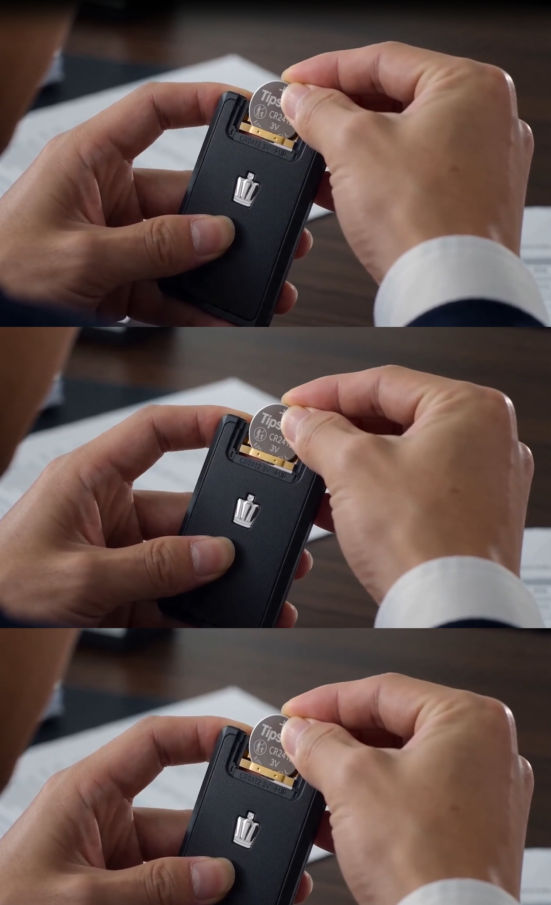
Before replacing the battery, please be sure to check the following:1) Verify the battery model (most important)
Open the key fob casing and check the model number printed on the battery.
Examples: CR2032, CR2032W, ML2020. Do not mix different models; variations in thickness may prevent proper installation or cause poor electrical contact.
⚠️ "CR" denotes a non-rechargeable (primary) battery, while "ML" denotes a rechargeable battery. These have different chemical compositions and are not interchangeable.
2) Confirm battery polarity (positive/negative terminals)
For coin/button batteries, the side with the printed text is the positive terminal (+), and the underside is the negative terminal (-). Ensure correct orientation during installation; installing it backward will cause the key to become unresponsive and may even damage the circuit board.
3) Inspect the interior of the key fob
- Check the metal battery contacts (clips): Look for deformation, oxidation (blackening), or rust. Oxidized contacts can lead to poor connectivity and a reduced remote operating range.
- Check for any liquid or white powder inside the compartment (signs of battery leakage). If leakage is present, clean away the corrosive residue. If the circuit board is severely corroded, it may already be damaged, in which case replacing the battery will not restore functionality.
4) Examine the battery's physical condition
Ensure the battery is not bulging, damaged, or leaking, and that it is within its expiration date. Never use a damaged battery.
5) Confirm suitability for the environment and intended use
- For standard, room-temperature use: Use a standard CR2032.
- For environments with high heat (e.g., sun exposure) or extreme cold (common for car keys or TPMS sensors): A "wide-temperature" (wide-range) version, such as the CR2032W, is recommended.
- The ML2020 is intended exclusively for older BMW key fobs equipped with an internal charging circuit; it cannot be used in standard car keys.
6) Tips for disassembly and reassembly
When opening or closing the key fob, avoid prying the circuit board with excessive force, as this could break the internal wiring. Once the battery has been replaced, ensure the casing is snapped shut securely to keep out moisture and dust.